
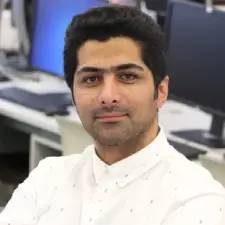
Dr. Yasser Mahmoudi Larimi
The University of Manchester, UK
Plenary Speaker
Dr. Yasser Mahmoudi Larimi is a Professor of Thermal Energy Engineering at the University of Manchester. Yasser has a strong international profile in clean and sustainable energy development through studying fundamentals and designs of low-carbon thermal and power systems. He chairs the UK ‘Turbulent Heat Transfer’ Special Interest Group and serve as Associate Editor for International Journal of Thermal Sciences. He has delivered over 30 invited talks at international conferences and meetings.

Dr. Alina Minea
Gheorghe Asachi Technical University of Iaşi, Romania
Plenary Speaker
Dr. Alina Adriana Minea is a full professor at the “Gheorghe Asachi” Technical University of Iași (TUIASI), where she coordinates the Laboratory of Thermal Analysis and Nanofluids. Her academic career includes more than 200 papers published in international peer-reviewed journals and over 20 authored or co-authored books, primarily in the field of heat transfer. Her research interests cover innovative heat transfer fluids, materials engineering, and engineering physics. She has been actively involved in major international projects, such as the Nanouptake COST Action, “NanoRound,” and DocTalent4EU. Combining numerical and experimental approaches, her work focuses on developing advanced fluids and energy-efficient heat transfer enhancement techniques. She is also committed to mentoring doctoral students and supporting early-career researchers in building transferable skills. Prof. Minea contributes extensively to the scientific community as Editor of JMES (Sage) and Associate Editor of Thermal Science and Engineering Progress (Elsevier), International Journal of Thermophysics (Springer), Alexandria Engineering Journal (Elsevier), AIME (Sage), and the Journal of Science (University of Hail). She also serves on the editorial boards of Thermal Sciences, Hybrid Advances (Elsevier), and the Journal of Heat and Mass Transfer Research. Her achievements have been recognized through several awards, including the Best Reviewer distinction from Applied Energy (Elsevier) in 2013 and 2016, the Best Researcher award from TUIASI in 2016 and 2019, being included since 2020 in top 2% scientists by Elsevier.
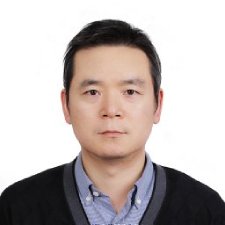
Dr. Xiangfan Xu
Tongji University, China
Plenary Speaker
Dr. Xiangfan Xu obtained his Bachelor and Ph.D degree in Department of Physics from Zhejiang University China in year 2003 and 2008, respectively. He then worked as a Research Fellow at National University of Singapore from year 2008 to 2013. He has been a faculty member at Tongji University since year 2013 and tenured in year 2018. His research focuses on the intersection of fundamental physics and nanoscale energy conversion, including nanoscale thermal transport, phononics, thermal interface materials and thermal management in nanoelectronics. He published more than 70 papers with google citation more than 20,000 times (Researcher ID: N-7125-2013)
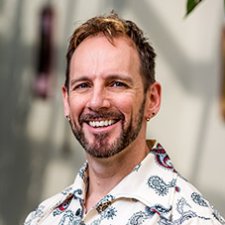
Dr. Thomas Adams
Rose-Hulman Institute of Technology, USA
Keynote Speaker
Thom Adams is Professor Emeritus of Mechanical Engineering at Rose-Hulman Institute of Technology, USA. He earned his BS from Rose-Hulman Institute of Technology, and his MS and PhD from Georgia Institute of Technology, all in Mechanical Engineering. He is the only faculty member in the history of Rose-Hulman to have received all three of the institute’s highest honors, including receiving both the Outstanding Scholar Award the Outstanding Teaching Award, as well as being named the Herman A. Moench Distinguished Professor. His early work in single-phase and two-phase heat transfer in microchannels represents some of the seminal work in the field. He later became a leading educator in the field of micro-electro-mechanical systems (MEMS) and authored a first of its kind textbook on the subject aimed at an audience of undergraduate technical majors regardless of specific discipline. His current research focuses on what he calls “generalist scholarship,” in which physical systems and processes are purposely modeled using the most fundamental concepts and methods available in order to ascertain physical trends and correlations that often go unnoticed when relying solely on the techniques of modern specialized research. His work has received international acclaim, receiving multiple best paper awards for his work in technical research as well as engineering education.